

Not much to add. Dog tolerates it and price is good


Parasite protection is no longer a one-size-fits-all decision. Today’s options include monthly chews, long-lasting topicals, collars, rapid flea-killing tablets, broad-spectrum preventives, and even a veterinary injection that can protect for up to a year.
Choosing among flea and tick treatments for dogs depends on much more than popularity. Your dog’s age, weight, medical history, lifestyle, local parasite risks, and ability to take oral or topical medicine all matter. A product that works beautifully for one dog may be unsuitable for another.
This 2026 guide compares widely used, veterinarian-recommended options so you can have a more informed discussion with your vet and choose protection that is practical to give consistently. The best flea and tick treatments for dogs balance dependable coverage, appropriate safety screening, and a schedule owners can follow.
Important: Product approvals, parasite coverage, minimum ages, and prescription requirements vary by country. Always follow the label supplied with the product and your veterinarian’s instructions.
Fleas can cause intense itching, flea allergy dermatitis, hair loss, skin infections, and anemia in severe infestations. They can also spread tapeworms. Ticks may transmit infections such as Lyme disease, ehrlichiosis, anaplasmosis, babesiosis, and Rocky Mountain spotted fever, depending on the region and tick species.
Parasites do not always disappear when the weather cools. Fleas can survive indoors, while some ticks remain active during mild winter periods. For many dogs, year-round flea and tick treatments provide more dependable protection than seasonal treatment.
Prevention is also usually easier than eliminating an established infestation. Once flea eggs, larvae, and pupae are present in carpets, bedding, furniture, or floor gaps, control may take weeks or months and requires treatment of every pet in the household.
|
Treatment |
Form |
Typical Schedule |
Best For |
Key Consideration |
|
Simparica Trio |
chew |
Monthly |
Broad monthly protection |
Isoxazoline safety warning |
|
Credelio Quattro |
chew |
Monthly |
Fleas, ticks, heartworm, and several intestinal worms |
Must be given with food |
|
NexGard Plus |
soft chew |
Monthly |
Convenient broad-spectrum coverage |
Isoxazoline safety warning |
|
Bravecto Chew or Topical |
chew or topical |
Up to 12 weeks |
Fewer at-home doses |
Duration differs by tick species |
|
Bravecto Quantum |
Veterinary injection |
Up to 12 months |
Owners who miss monthly doses |
Must be administered by a veterinarian |
|
Simparica or Credelio |
chew |
Monthly |
Flea-and-tick-only oral protection |
Does not replace heartworm prevention |
|
Seresto |
Collar |
Up to 8 months |
Long-lasting non-oral protection |
Correct fit and authentic sourcing matter |
|
Frontline Plus |
Topical |
Monthly |
Non-oral, over-the-counter protection |
Application instructions matter |
|
K9 Advantix II |
Topical |
Monthly |
Flea and tick control with repellency |
Permethrin is dangerous to cats |
|
Capstar |
Oral tablet |
Short acting |
Rapid adult flea knockdown |
Not a long-term preventive |
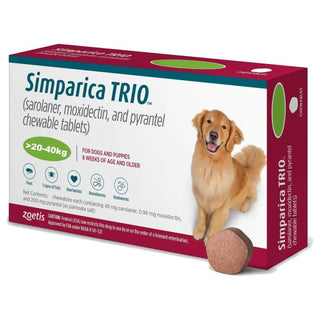
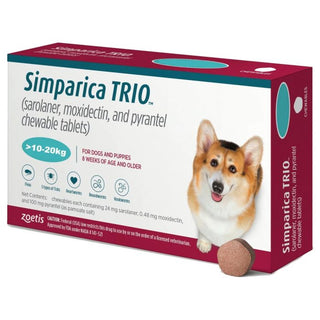
Simparica Trio combines sarolaner, moxidectin, and pyrantel in one monthly chew. It treats and prevents fleas, controls multiple tick species, prevents heartworm disease, and treats common roundworm and hookworm infections.
It is often chosen by pet parents who prefer a single monthly product rather than separate flea, tick, heartworm, and intestinal parasite medicines.
Among flea and tick treatments for dogs, Simparica Trio stands out for its convenience and broad coverage. It may be especially useful for active dogs that hike, visit parks, travel, or live in areas where mosquitoes and ticks are common.
Simparica Trio belongs to the isoxazoline class. These medicines are commonly used, but neurologic reactions such as tremors, poor coordination, or seizures have been reported in some dogs.
Tell your veterinarian about any seizure or neurologic history before use. Heartworm testing may also be needed before starting or restarting an all-in-one preventive.
Credelio Quattro combines lotilaner, moxidectin, praziquantel, and pyrantel. It provides monthly protection against fleas, multiple tick species, heartworm disease, roundworms, hookworms, and several tapeworm species.
Its tapeworm coverage helps distinguish it from some other monthly combination chews.
This can be one of the best flea and tick treatments for dogs that need comprehensive internal and external parasite control in a single dose. It may also suit households seeking to simplify a complicated preventive schedule.
Credelio Quattro must be administered with food for proper absorption. It also contains an isoxazoline ingredient, so dogs with a history of seizures or neurologic problems require a veterinary risk assessment.
Your veterinarian should also confirm whether the intestinal worms covered by the product match the risks in your dog’s environment.
NexGard Plus combines afoxolaner, moxidectin, and pyrantel. It provides monthly flea and tick control, prevents heartworm disease, and treats common roundworm and hookworm infections.
For dogs that readily accept a soft chew, this is a convenient all-in-one option. It is similar in purpose to Simparica Trio, but active ingredients, labeled tick coverage, minimum weight, flavor, and individual tolerance differ.
Your veterinarian may recommend one over the other based on your dog’s health and regional parasite exposure.
NexGard Plus earns a place among the leading flea and tick treatments for dogs by reducing the need to coordinate multiple monthly products.
Best for: Pet parents who want a familiar monthly chew with broad parasite protection.
Important: NexGard Plus contains an isoxazoline. Discuss any history of seizures, tremors, poor coordination, or neurologic disease with your veterinarian. Dogs should also receive appropriate heartworm testing and ongoing screening.
Bravecto contains fluralaner and is available in oral and topical forms in some markets. Depending on the formulation and tick species, one dose may provide protection for up to 12 weeks.
This makes it appealing to pet parents who find monthly dosing difficult.
Bravecto can be a strong option when adherence is the biggest concern. Missing doses creates gaps in protection, so a longer interval may provide more reliable real-world results for some households.
The labeled duration is not identical for every tick species, so “12 weeks” should not be assumed for every situation. Bravecto is also an isoxazoline product, and standard neurologic precautions apply.
When comparing flea and tick treatments for dogs, check whether the product protects against the ticks found in your area and exactly how long that protection lasts.
Bravecto Quantum is a clinic-administered fluralaner injection introduced as a long-acting option for dogs. One injection can protect eligible dogs against fleas and several tick species for up to 12 months, although the labeled interval for certain ticks may be shorter.
This is a major 2026 option for owners who frequently forget monthly or quarterly doses. It may also suit dogs that refuse chews or develop skin irritation from topical products.
Bravecto Quantum is not an online or at-home treatment. Your veterinarian must decide whether your dog is old enough, healthy enough, and appropriately protected based on local tick risks.
Because the medication remains active for an extended period, a careful medical and neurologic history is particularly important before treatment.
Not every dog needs an all-in-one product. Some already receive a separate heartworm preventive, while others require a customized parasite plan.
In those situations, Simparica or Credelio may provide focused monthly oral flea and tick control.
Simparica uses sarolaner, while Credelio uses lotilaner and must be given with food. Both are prescription isoxazoline medicines, but their minimum ages, minimum weights, labeled tick species, and administration instructions differ.
These flea and tick treatments for dogs can be useful when a veterinarian wants more flexibility rather than combining every preventive into one chew.
Best for: Dogs already receiving separate heartworm and intestinal worm protection.
Remember: Flea-and-tick-only products do not replace heartworm prevention. Confirm that your dog’s full parasite plan does not leave a coverage gap.
The Seresto collar releases imidacloprid and flumethrin over time and can provide flea and tick protection for up to eight months when used correctly.
It may suit dogs that refuse tablets or experience digestive upset with oral preventives.
A collar is easy to see, which helps owners confirm that protection is in place. However, it must fit correctly, remain in contact with the skin, and be replaced according to the label.
Check the following before using a collar:
Remove the collar and contact your veterinarian if your dog develops significant skin irritation, lethargy, vomiting, tremors, or other unusual signs.
Frontline Plus combines fipronil with an insect growth regulator. It kills adult fleas, helps interrupt the flea life cycle, and controls labeled tick species.
It is applied directly to the skin, usually once a month.
This option may be helpful for dogs that cannot take oral isoxazolines or for owners who prefer a non-prescription topical. Correct application is essential: part the hair, apply the liquid directly to the skin, use the proper weight range, and follow bathing or swimming instructions.
Frontline Plus remains one of the more recognizable topical flea and tick treatments for dogs, but no topical works well when it is applied mostly to the coat or washed off too soon.
Best for: Dogs needing an established non-oral option and households comfortable with monthly spot-on application.
K9 Advantix II is a monthly topical containing ingredients that kill fleas and ticks and repel certain biting pests.
Repellency can be valuable for dogs with high outdoor exposure because some oral medicines kill parasites only after they bite.
However, this product contains permethrin and must never be used on cats. Permethrin exposure can cause severe and potentially fatal poisoning in cats.
In homes with both dogs and cats:
This is one of the flea and tick treatments for dogs where household species matter as much as the dog’s health. A home with cats may require a different canine product.
Capstar contains nitenpyram and quickly kills adult fleas. It can be useful when a dog arrives home covered in fleas or needs rapid relief while a longer-term plan is being arranged.
Capstar is not a monthly preventive, does not provide meaningful long-term protection, and does not control ticks. New adult fleas can jump onto the dog again after the short treatment window.
Think of Capstar as an emergency knockdown tool rather than a complete flea program.
Ask your veterinarian before combining it with other flea and tick treatments for dogs, especially if your dog is young, underweight, unwell, pregnant, nursing, or taking other medicines.
When shopping for the ideal flea and tick treatment for dogs, keep these key criteria in mind:
By choosing a highly rated, vet-backed preventative, you can keep your dog happy, healthy, and pest-free all year long. Ready to protect your pup? Talk to your vet today to secure the right prescription or browse these trusted solutions online to kickstart their defense.
Most flea and tick treatments for dogs are well tolerated when the correct product and dose are selected, but every medicine can cause side effects.
Review the active ingredients, follow the exact label directions, and contact your veterinarian promptly if your dog develops any unusual signs.
Keep the package so you can provide the product name, active ingredients, strength, lot number, and expiry date if a reaction occurs.
There is no single winner for every dog.
Simparica Trio, Credelio Quattro, and NexGard Plus are strong monthly all-in-one choices. Bravecto may suit owners who prefer fewer doses, while Seresto, Frontline Plus, or another veterinarian-selected topical may suit dogs needing non-oral protection.
Many approved products have strong evidence for effectiveness and are well tolerated by most eligible dogs.
Safety still depends on the dog’s age, weight, health history, other medicines, and correct dosing. Dogs with seizure or neurologic histories need special discussion before using an isoxazoline product.
Oral products are convenient, do not wash off, and leave no residue on the coat. Topicals may be preferable for dogs that refuse chews or should avoid a particular oral ingredient.
The more suitable choice depends on the dog, the product label, the lifestyle, and the medical history.
Sometimes, but not automatically.
Ingredients may overlap, and shampooing can affect certain topical products. Ask your veterinarian before combining treatments.
Often, yes.
Fleas can enter homes on people or other pets, and dogs can encounter ticks during brief walks, time in the garden, boarding, grooming, or travel. Your veterinarian can recommend a plan based on local risk.
Switching may be possible, but timing matters.
Giving the next product too early could duplicate drug exposure, while waiting too long may create a protection gap. Confirm the correct changeover date with your veterinarian.
Home remedies and essential oils are not dependable substitutes for proven preventives. Some concentrated oils can irritate or poison pets.
Use a veterinarian-approved product and treat the environment when an infestation is present.
No, unless the manufacturer’s label specifically instructs you to do so.
The active ingredients may not be distributed evenly throughout a chew or topical applicator. Dividing a dose could leave one dog underdosed and the other overdosed.
Check the product instructions and contact your veterinarian. The correct action depends on the medicine, how late the dose is, and whether it also prevents heartworm disease.
Do not give two doses together unless your veterinarian specifically instructs you to do so.
The leading flea and tick treatments for dogs in 2026 offer more choices and broader protection than ever.
Simparica Trio, Credelio Quattro, and NexGard Plus are convenient monthly all-in-one options. Bravecto products reduce dosing frequency, while Bravecto Quantum introduces long-term, clinic-administered protection. Seresto, Frontline Plus, and carefully selected topicals remain useful alternatives for dogs that need non-oral treatment.
The right choice is not simply the longest-lasting or most expensive product. It is the option that matches your dog’s age, weight, health, environment, and complete parasite-prevention plan.
Shop only from a trusted pet medicine supplier, confirm that the package is sealed and correctly labeled, and speak with your veterinarian before starting or changing treatment.
Consistent, correctly dosed protection is the best way to keep fleas, ticks, and the diseases they may carry away from your dog.

Overall rating: 4.8 / 5 from 1134 reviews.
Not much to add. Dog tolerates it and price is good

This is the only flea medication that works for us where we live.

This on-line company is such a good find. They provide quality products at a good price with delivering them efficiently. Definitely recommend purchasing from them.

Items arrived on time and work great!

Love stronghold

Same product at a great price

Fast shipping great quality and price

We are happy with Heartgard Plus

I’ve been using Symperica Trio for a yr now. Love it. 79 pets ships fast and prices are more affordable. Thank You

Right after a haircut. 6 year old dashund/shih Tzu mix

Great deal on flea/tick. Helps take care of my pup
Stronghold Violet For Dogs 5-10lbs (2.6-5kg)

Two sweet girlies decided to make our deck their home. Mosquitoes are a big problem where we live and we had to get them protected. This was the best bang for the buck. I’ve ordered from 79Pets several times and while delivery is not fast it is very consistent.
Revolution Plus For Medium Cats 5.6-11 lbs (2.6-5kg)

As a retired veterinary technician I was extremely happy to finally see a flea and heartworm medication that actually does tapeworms too!!!!!!! This is a 1st to my knowledge....I live in a tropical climate where fleas never die so this is heaven sent.
Nexgard Combo For Cats 5.5-16.5 lbs (2.5-7.5 kg)

Great for free delivery worldwide and it took shorter time than I expected. Thanks
Simparica Trio For Dogs 5.6-11 lbs (2.5-5 kg)

My dog is excited to have her Advocate given every month! Great customer service and we're already a returned customer!
Advocate (Advantage Multi) For Small Dog Upto 4kg 8.8lbs (4kg)

Great price, authentic quality and reliable shipping. Shipping takes a bit longer, since it is being shipped from abroad. But still a reliable service.
NexGard & Heartgard (Green) Combo Dogs 24-60 lbs (10-25 kg)

79 pets has great service, they resolved my issue when I purchased by mistake . Thank you!
Simparica Trio For Dogs 22.1-44 lbs (10-20 kg)

Very happy with the price of Stronghold heart worm med for my dog. Seems to be working well.
Stronghold Teal For Dogs 44-88lbs (20-40kg)

My dog loves this product, never got any issue. Good price , deliver on time. We will definitely keep purchasing with 79 pets.com. Thanks!
Simparica Trio For Dogs 22.1-44 lbs (10-20 kg)

Great customer service! Would definitely purchase from them again!
Advocate (Advantage Multi) For Small Dog Upto 4kg 8.8lbs (4kg)

My fur babies love being protected from fleas!
Stronghold Blue For Cats 5.7-15.5lbs (2.6-7.5kg)

No more fleas! I love it and my pets love it!
Stronghold Teal For Dogs 44-88lbs (20-40kg)

I have 3 of these little rascals so Michigan flea/tick season can be financially brutal! Thank you for keeping NexGard so affordable.
NexGard Chew For Small Dogs 10-24lbs (4-10kg)

it is so easy to order
NexGard & Heartgard (Brown) Combo Dogs 60-121 lbs (25-50 kg)

I have no difficulty to give the tablet to my dog. I want my shipping to come faster by the way.
NexGard Spectra For Small Dog 8-16 lbs (3.5-7.5kg)

Stronghold Plus keep my baby safe
Stronghold Plus For Large Cats 11 lbs to 22 lbs (5-10kg)

Thank You 79pets
Stronghold Plus For Medium Cats 5.5 lbs to 11 lbs (2.5-5kg)

Advocate can only be found here n it's easier to order online. Thanks 79!
Advocate (Advantage Multi) For Cats Over 8.8lbs (4kg)

Great product and price. Shipping updates helped, since product comes from abroad. I would definitely recommend and use it again.
NexGard & Heartgard (Green) Combo Dogs 24-60 lbs (10-25 kg)

Easy to give!
NexGard Spectra For Small Dog 8-16 lbs (3.5-7.5kg)

Stronghold Plus does exactly what it was advertised for. Effective and best product. Would highly recommend Stronghold Plus.
Stronghold Plus For Cats 5.5 lbs to 11 lbs (2.5-5kg) 3 Pack

After Seresto collars failed to get rid of fleas, I didn't know where to turn. I saw a post on a page I follow (Kentucky Kitty Cats) saying that they use Nexgard Combo for the cats they shelter. I decided to try it and IT WORKS!
Nexgard Combo for Cats 5.5-16.5 lbs (2.5-7.5 kg)

My kitty love Revolution. One of the best product for flea & ticks. Good price will definitely recommend this website.
Revolution Plus For Medium Cats 5.6-11 lbs (2.6-5kg)

Tried this the first time and the correct medication was sent on time to me. Will definitely use this site again. Thanks!
Simparica Chewables For Very Small Dogs 5.6-11 lbs (2.5-5kg)

Happy Kitty
Revolution Plus For Medium Cats 5.6-11 lbs (2.6-5kg)

As described. Value for money
Nexgard Chew Red for Large Dogs Flea & Tick 60-121 lbs. (25-50kg)

This is Lexi Marie! She was wondering why mom was so excited for buying flea medicine. I explained to her that we saved $100 and that she would understand some day when she grows up.
Revolution Plus For Large Cats 11.1-22lbs (5-10kg)

Received on time. Thank You 79Pets
Nexgard Chew Red for Large Dogs Flea & Tick 60-121 lbs. (25-50kg)

Very good experience!
Revolution Plus For Large Cats 11.1-22lbs (5-10kg)

Last year, I made a visit to the vet. I told them that Kattie/cat had ear mites. They gave me an ointment costing $80canadian. I used it up and purchased another bottle. $160. total not including the cost of the vet visit. No results. The ear mites have been there for a long time. Canadian vets have control of what is sold in Pet stores and you cannot purchase off the shelf products not recognized by them. I jumped at the chance to purchase your produce with a recommended 100% effectivity. I was willing to try, but was suspicions. After a month there was still a little scratching but after 6 weeks, the mites are gone and the scratching is gone. Thank you very much for this mite solution. I recommend it heartily. Harry P.S. Do not tell the Canadian vets as they will outlaw your product.
Revolution Plus For Medium Cats 5.6-11 lbs (2.6-5kg)