

Not much to add. Dog tolerates it and price is good


Choosing parasite protection for your dog should not be a rushed decision. All-in-one flea, tick, and heartworm medication for dogs can combine protection against several common parasites in one treatment, but the best option depends on much more than convenience.
Your dog’s weight, age, medical history, outdoor habits, travel plans, and local parasite exposure all matter. A dog that spends weekends hiking through grassy trails and wooded areas may need different tick protection from a dog that mainly walks around city neighborhoods. Puppies, senior dogs, and dogs with previous health concerns may also need extra consideration.
This guide explains how to compare combination parasite medications, what to check before buying, and how to choose a treatment that suits your dog’s needs.
An all-in-one parasite medication is a treatment designed to protect dogs against multiple types of parasites simultaneously. Many are available as monthly flavored chews, while some may come in other forms.
Depending on the formula, an all-in-one flea, tick, and heartworm medication for dogs may help protect against:
However, “all-in-one” does not mean every product protects against every possible parasite. One medicine may cover fleas, ticks, heartworms, roundworms, and hookworms, while another may offer different parasite coverage.
Always check the product label carefully before ordering. The best choice is the one that covers the parasites your dog is most likely to encounter.
When comparing all-in-one flea, tick, and heartworm medications for dogs, look beyond convenience and assess how each formula aligns with your dog’s actual parasite risk.
Fleas can cause itching, skin irritation, hair loss, and flea allergy problems. Ticks may transmit diseases. Mosquitoes can spread heartworm larvae, while intestinal worms may affect your dog’s digestive health.
A combination preventive may simplify your dog’s monthly care routine, but it should not be chosen solely because it is popular or easy to administer. The right treatment should offer useful protection without including ingredients that may not suit your dog.
A well-chosen all-in-one flea, tick, and heartworm medication for dogs can make prevention easier, but your veterinarian should still help guide your final decision.
Start by thinking about your dog’s usual lifestyle. This is one of the most important parts of choosing the right parasite preventive.
Your dog may have a higher risk of fleas, ticks, or intestinal worms if they:
Heartworm prevention is also important to discuss, even for dogs that spend much of their time indoors. Mosquitoes can enter homes, and dogs may be exposed during normal walks, vet visits, grooming appointments, or short outdoor trips.
Ask your veterinarian which parasites are common where you live and where you travel. The answer may help you avoid buying too little protection—or paying for coverage your dog does not actually need. The best all-in-one flea tick and heartworm medication for dogs should match those real-world risks.
Do not assume that two combination medications provide the same protection. The label is more important than the product category.
Before choosing an all-in-one flea tick and heartworm medication for dogs, compare the following:
|
Compare Why |
Why It Matters |
|
Flea coverage |
Helps prevent flea infestation and flea-related irritation |
|
Tick species covered |
Tick coverage can differ between products |
|
Heartworm prevention |
Helps protect against mosquito-borne heartworm disease |
|
Intestinal worm coverage |
May include roundworms, hookworms, and sometimes other worms |
|
Treatment frequency |
Many are monthly, but always follow the product label |
|
Minimum age and weight |
Important for puppies and small dogs |
|
Method of administration |
Your dog must be able to take it consistently |
A good buying decision starts with a clear list of the parasites your dog is most likely to encounter. Then check whether the product addresses those exact risks. This is the clearest way to compare all-in-one flea, tick, and heartworm medication for dogs without getting distracted by marketing claims.
Every all-in-one flea, tick, and heartworm medication for dogs is supplied in defined weight ranges, so an accurate current weight is essential.
Most dog parasite medications are sold in specific weight bands. Selecting the correct pack is important for both effectiveness and safety.
Weigh your dog before ordering, especially when your dog is:
Do not choose a dose based on your dog’s breed, age, or appearance. A dog that looks suitable for one pack may fall into another weight range when weighed properly.
If your dog is close to the border between two weight categories, ask your veterinarian for advice. Do not split, combine, or alter doses unless your veterinarian has specifically instructed you to do so.
A medication can be effective yet not suitable for every dog. Your veterinarian should consider your dog’s age, body weight, overall health, and past reactions before recommending a treatment.
Tell your veterinarian if your dog has:
Some flea and tick active ingredients belong to a group called isoxazolines. These medicines are widely used, but dogs with a history of seizures or neurological problems may need extra veterinary advice before using them.
For this reason, the best all-in-one flea, tick, and heartworm medication for dogs is not always the one with the broadest list of claims. It is the option that is suitable for your individual dog.
Parasite prevention only works when doses are given on time. A product that looks perfect on paper may not be useful if your dog refuses it or if doses are often forgotten.
Ask yourself:
For many households, all-in-one flea, tick, and heartworm medication for dogs is helpful because one treatment can replace several monthly reminders.
Set a repeating reminder on your phone, record each dose in your dog’s health file, and order your next supply before the final dose is due.
If your dog is extremely picky, has a sensitive stomach, or cannot reliably take a chew, ask your veterinarian whether another format or separate products may be more suitable.
A responsible plan for all-in-one flea tick and heartworm medication for dogs includes veterinary guidance on appropriate heartworm screening.
Heartworm prevention is important, but it does not replace proper testing. Your veterinarian may recommend a heartworm test before starting prevention, especially for adult dogs that have missed doses, changed medications, or were not previously on a regular prevention schedule.
Annual testing is often part of responsible preventive care. It helps confirm that your dog remains free from heartworm infection and gives your veterinarian an opportunity to review whether the current treatment plan is still appropriate.
Do not restart, switch, or combine heartworm-related medicines without professional guidance.
A lower-priced product is not always the better value. Compare the total cost of achieving the parasite protection your dog actually needs.
A combination medicine may cost more per box but may replace separate flea, tick, heartworm, and intestinal worm treatments. On the other hand, a broad combination product may not be worthwhile if it protects against parasites that are not relevant to your dog’s lifestyle or if a separate plan is medically safer.
When comparing value, check:
The right all-in-one flea, tick, and heartworm medication for dogs should provide useful protection, not simply the longest ingredient list.
Different products may cover different tick species and intestinal worms. Always compare the approved label rather than relying solely on a familiar name.
An incorrect dose may leave your dog inadequately protected or expose them to an unsuitable amount of medication. Weigh your dog and recheck the package every time you reorder.
Combining several parasite treatments can lead to duplicate ingredients or an unsuitable regimen. Ask your veterinarian before adding another flea, tick, or heartworm product, or starting a new worming treatment.
Your dog’s normal environment matters, but travel matters too. Tell your veterinarian about upcoming holidays, camping trips, boarding stays, or visits to another region.
Indoor dogs may still encounter fleas, mosquitoes, and other parasites through walks, visitors, grooming sessions, vet clinics, or contact with other animals.
Use this checklist during your veterinary visit or before placing an order:
Before choosing an all-in-one flea, tick, and heartworm medication for dogs, make your final decision only after confirming the dose, coverage, and suitability with your veterinarian.
No. Combination preventives can be convenient, but the right option depends on your dog’s age, weight, health history, parasite exposure, and ability to take the medication consistently.
No. Coverage varies between products. Check the label for the exact flea, tick, heartworm, and intestinal parasite protection included.
Many products are given monthly, but you should always follow the label and your veterinarian’s instructions for the specific medication you use.
Some combinations may be appropriate, but you should never assume they are safe together. Ask your veterinarian before using more than one parasite product.
The best all-in-one flea, tick, and heartworm medication for dogs is the one that matches your dog’s parasite risk and is safe for their individual health needs. Your veterinarian can help you compare suitable options.
Choosing parasite prevention should be a thoughtful decision, not a quick add-to-cart choice. Start with your dog’s lifestyle, compare the parasite coverage on each label, confirm the right weight range, and discuss your dog’s health history with a veterinarian.
An all-in-one flea, tick, and heartworm medication for dogs can make monthly protection easier to manage. When selected carefully and used consistently, it can help support your dog’s comfort, health, and year-round parasite protection.
This article is for general educational purposes and does not replace veterinary advice. Speak with a veterinarian before starting, changing, or combining parasite medications for your dog.

Overall rating: 4.8 / 5 from 1134 reviews.
Not much to add. Dog tolerates it and price is good

This is the only flea medication that works for us where we live.

This on-line company is such a good find. They provide quality products at a good price with delivering them efficiently. Definitely recommend purchasing from them.

Items arrived on time and work great!

Love stronghold

Same product at a great price

Fast shipping great quality and price

We are happy with Heartgard Plus

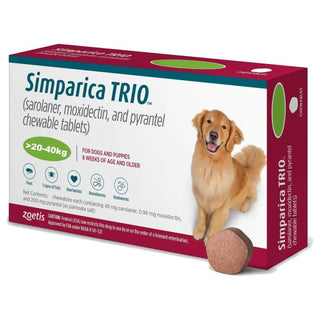
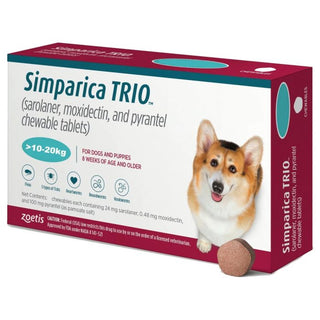
I’ve been using Symperica Trio for a yr now. Love it. 79 pets ships fast and prices are more affordable. Thank You

Right after a haircut. 6 year old dashund/shih Tzu mix

Great deal on flea/tick. Helps take care of my pup
Stronghold Violet For Dogs 5-10lbs (2.6-5kg)

Two sweet girlies decided to make our deck their home. Mosquitoes are a big problem where we live and we had to get them protected. This was the best bang for the buck. I’ve ordered from 79Pets several times and while delivery is not fast it is very consistent.
Revolution Plus For Medium Cats 5.6-11 lbs (2.6-5kg)

As a retired veterinary technician I was extremely happy to finally see a flea and heartworm medication that actually does tapeworms too!!!!!!! This is a 1st to my knowledge....I live in a tropical climate where fleas never die so this is heaven sent.
Nexgard Combo For Cats 5.5-16.5 lbs (2.5-7.5 kg)

Great for free delivery worldwide and it took shorter time than I expected. Thanks
Simparica Trio For Dogs 5.6-11 lbs (2.5-5 kg)

My dog is excited to have her Advocate given every month! Great customer service and we're already a returned customer!
Advocate (Advantage Multi) For Small Dog Upto 4kg 8.8lbs (4kg)

Great price, authentic quality and reliable shipping. Shipping takes a bit longer, since it is being shipped from abroad. But still a reliable service.
NexGard & Heartgard (Green) Combo Dogs 24-60 lbs (10-25 kg)

79 pets has great service, they resolved my issue when I purchased by mistake . Thank you!
Simparica Trio For Dogs 22.1-44 lbs (10-20 kg)

Very happy with the price of Stronghold heart worm med for my dog. Seems to be working well.
Stronghold Teal For Dogs 44-88lbs (20-40kg)

My dog loves this product, never got any issue. Good price , deliver on time. We will definitely keep purchasing with 79 pets.com. Thanks!
Simparica Trio For Dogs 22.1-44 lbs (10-20 kg)

Great customer service! Would definitely purchase from them again!
Advocate (Advantage Multi) For Small Dog Upto 4kg 8.8lbs (4kg)

My fur babies love being protected from fleas!
Stronghold Blue For Cats 5.7-15.5lbs (2.6-7.5kg)

No more fleas! I love it and my pets love it!
Stronghold Teal For Dogs 44-88lbs (20-40kg)

I have 3 of these little rascals so Michigan flea/tick season can be financially brutal! Thank you for keeping NexGard so affordable.
NexGard Chew For Small Dogs 10-24lbs (4-10kg)

it is so easy to order
NexGard & Heartgard (Brown) Combo Dogs 60-121 lbs (25-50 kg)

I have no difficulty to give the tablet to my dog. I want my shipping to come faster by the way.
NexGard Spectra For Small Dog 8-16 lbs (3.5-7.5kg)

Stronghold Plus keep my baby safe
Stronghold Plus For Large Cats 11 lbs to 22 lbs (5-10kg)

Thank You 79pets
Stronghold Plus For Medium Cats 5.5 lbs to 11 lbs (2.5-5kg)

Advocate can only be found here n it's easier to order online. Thanks 79!
Advocate (Advantage Multi) For Cats Over 8.8lbs (4kg)

Great product and price. Shipping updates helped, since product comes from abroad. I would definitely recommend and use it again.
NexGard & Heartgard (Green) Combo Dogs 24-60 lbs (10-25 kg)

Easy to give!
NexGard Spectra For Small Dog 8-16 lbs (3.5-7.5kg)

Stronghold Plus does exactly what it was advertised for. Effective and best product. Would highly recommend Stronghold Plus.
Stronghold Plus For Cats 5.5 lbs to 11 lbs (2.5-5kg) 3 Pack

After Seresto collars failed to get rid of fleas, I didn't know where to turn. I saw a post on a page I follow (Kentucky Kitty Cats) saying that they use Nexgard Combo for the cats they shelter. I decided to try it and IT WORKS!
Nexgard Combo for Cats 5.5-16.5 lbs (2.5-7.5 kg)

My kitty love Revolution. One of the best product for flea & ticks. Good price will definitely recommend this website.
Revolution Plus For Medium Cats 5.6-11 lbs (2.6-5kg)

Tried this the first time and the correct medication was sent on time to me. Will definitely use this site again. Thanks!
Simparica Chewables For Very Small Dogs 5.6-11 lbs (2.5-5kg)

Happy Kitty
Revolution Plus For Medium Cats 5.6-11 lbs (2.6-5kg)

As described. Value for money
Nexgard Chew Red for Large Dogs Flea & Tick 60-121 lbs. (25-50kg)

This is Lexi Marie! She was wondering why mom was so excited for buying flea medicine. I explained to her that we saved $100 and that she would understand some day when she grows up.
Revolution Plus For Large Cats 11.1-22lbs (5-10kg)

Received on time. Thank You 79Pets
Nexgard Chew Red for Large Dogs Flea & Tick 60-121 lbs. (25-50kg)

Very good experience!
Revolution Plus For Large Cats 11.1-22lbs (5-10kg)

Last year, I made a visit to the vet. I told them that Kattie/cat had ear mites. They gave me an ointment costing $80canadian. I used it up and purchased another bottle. $160. total not including the cost of the vet visit. No results. The ear mites have been there for a long time. Canadian vets have control of what is sold in Pet stores and you cannot purchase off the shelf products not recognized by them. I jumped at the chance to purchase your produce with a recommended 100% effectivity. I was willing to try, but was suspicions. After a month there was still a little scratching but after 6 weeks, the mites are gone and the scratching is gone. Thank you very much for this mite solution. I recommend it heartily. Harry P.S. Do not tell the Canadian vets as they will outlaw your product.
Revolution Plus For Medium Cats 5.6-11 lbs (2.6-5kg)