

Not much to add. Dog tolerates it and price is good


As a devoted pet parent, you've likely encountered your furry companion's penchant for face licking, which can evoke both endearment and curiosity. But what motivates dogs to engage in this behavior, and should you consider addressing it?
The seemingly universal dog behavior of face-licking originates in the evolutionary heritage of our canine companions. This peculiar practice can be traced back to the wolf puppy behavior of licking the mouths of adult wolves, a technique employed to stimulate regurgitation of partially digested food. This transition from mother's milk to semi-digested sustenance marks a crucial step in a pup's growth toward consuming solid food.
Licking, whether directed at another dog's face or a human's, serves various social purposes within the canine world. One common interpretation is that it functions as an appeasement gesture, signifying a dog's deference in social interactions. Additionally, it can serve as a means to request sustenance, gather more social cues, express affection, or vie for attention.
Grooming also plays a role in this multifaceted behavior. Dogs might lick their canine housemates' faces, as well as yours or other body parts, as part of their grooming ritual. When they can't reach your face, they may opt for the closest available body part, your hand, arm, or leg. Sometimes, this affectionate licking can be perceived as a sign of their fondness.
Surprisingly, dogs may even extend their face-licking tendencies to strangers. This behavior is often an attempt to establish rapport with unfamiliar individuals, potentially to ward off any perceived threats. When dogs engage in face licking with children, it might be an expression of affection, an act of appeasement, or simply a means of tidying up any lingering food residue from their faces.
In general, for healthy individuals, dog saliva poses no substantial health risk when it comes into contact with intact skin. However, it's essential to exercise caution when your dog attempts to lick an open wound on your skin. Allowing their saliva to interact with such wounds can have adverse consequences. It may perpetuate a moist environment that could hinder the wound's healing process, potentially facilitating the growth of harmful bacteria and leading to a potential skin infection.
Over the past year, the Centers for Disease Control and Prevention (CDC) have recorded 12 reported cases in which individuals fell ill due to a bacterium found in dog saliva. The culprit behind these cases was identified as Capnocytophaga canimorsus, a bacterium that is normally harmless to both dogs and cats. However, for individuals with compromised immune systems, there exists a risk of infection if this bacterium enters the skin through an open wound, such as one caused by a bite or a cut.
It's worth noting that for such an infection to occur, the dog must have a high concentration of the specific bacterium, and their saliva must directly contact the open wound. As a preventive measure, it is advisable to thoroughly wash your hands after interacting with any dog.
In most cases involving healthy individuals, allowing a dog to engage in face or body licking should present minimal health concerns. However, it's essential to exercise some degree of caution. Avoid letting dogs lick your mouth or come into contact with any open skin wounds if you have any concerns.
To balance affection and hygiene, some people offer their dogs the underside of their chin to lick. Following this interaction, they promptly wash their face or apply an antibacterial sanitizing spray or gel to the licked area. Alternatively, individuals may permit their dogs to lick their hands, washing them or using antibacterial spray or gel to ensure cleanliness.
If you are less than enthusiastic about your dog's penchant for face licking, you must recognize that you may inadvertently reinforce this behavior. Each time your dog licks your face and receives attention, they are more likely to repeat the action. Moreover, if your pup licks you while you're eating, and you respond by giving them a portion of your food, you inadvertently encourage the behavior to persist.
If you'd prefer your dog not to lick your face, consider redirecting their affection and attention toward more acceptable alternatives that align with your preferences. By avoiding any encouragement of the licking behavior, you can gently guide your pet towards expressing their affection in ways that align with your comfort.
Overall rating: 4.8 / 5 from 1134 reviews.
Not much to add. Dog tolerates it and price is good

This is the only flea medication that works for us where we live.

This on-line company is such a good find. They provide quality products at a good price with delivering them efficiently. Definitely recommend purchasing from them.

Items arrived on time and work great!

Love stronghold

Same product at a great price

Fast shipping great quality and price

We are happy with Heartgard Plus

I’ve been using Symperica Trio for a yr now. Love it. 79 pets ships fast and prices are more affordable. Thank You

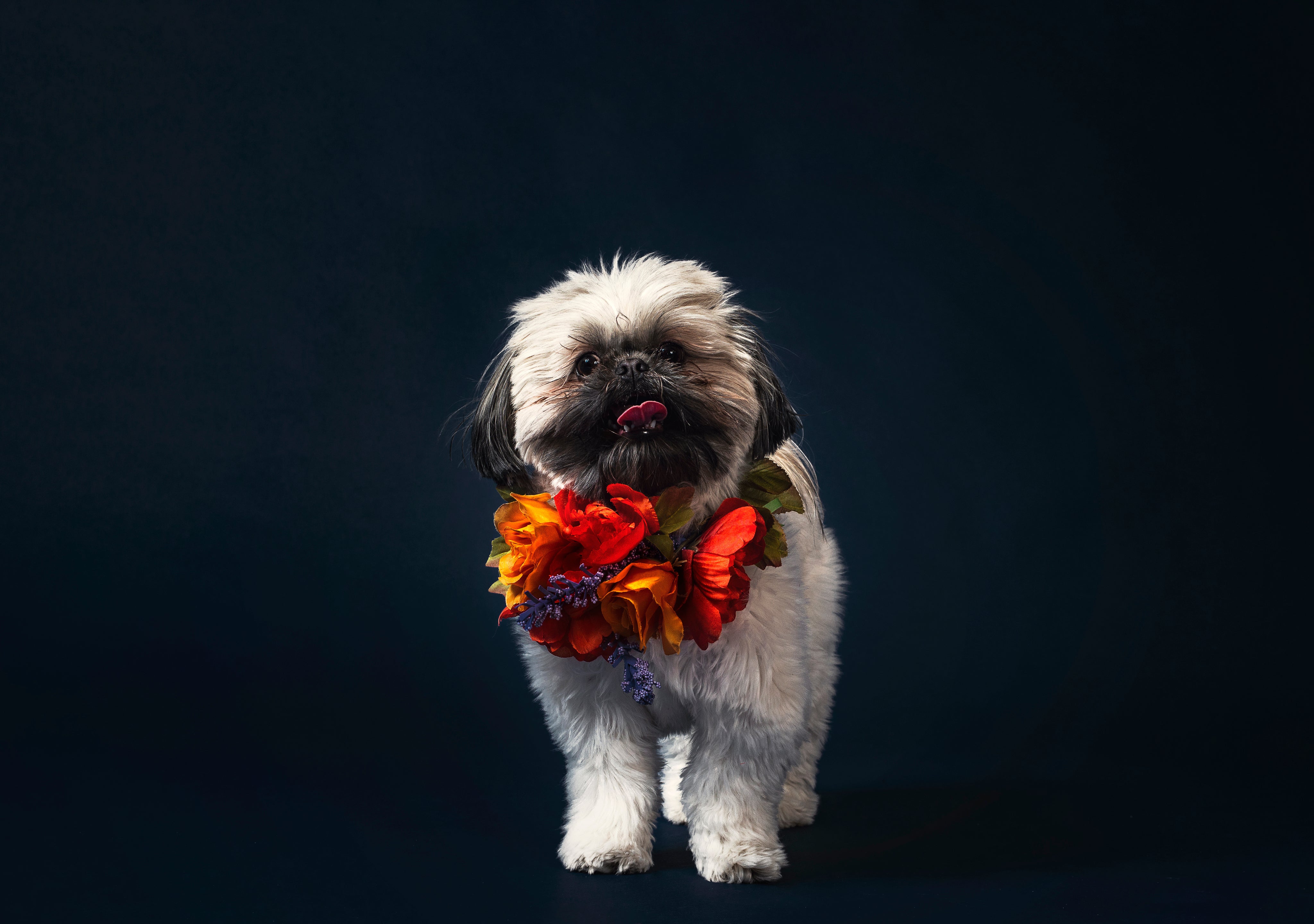
Right after a haircut. 6 year old dashund/shih Tzu mix

Great deal on flea/tick. Helps take care of my pup
Stronghold Violet For Dogs 5-10lbs (2.6-5kg)

Two sweet girlies decided to make our deck their home. Mosquitoes are a big problem where we live and we had to get them protected. This was the best bang for the buck. I’ve ordered from 79Pets several times and while delivery is not fast it is very consistent.
Revolution Plus For Medium Cats 5.6-11 lbs (2.6-5kg)

As a retired veterinary technician I was extremely happy to finally see a flea and heartworm medication that actually does tapeworms too!!!!!!! This is a 1st to my knowledge....I live in a tropical climate where fleas never die so this is heaven sent.
Nexgard Combo For Cats 5.5-16.5 lbs (2.5-7.5 kg)

Great for free delivery worldwide and it took shorter time than I expected. Thanks
Simparica Trio For Dogs 5.6-11 lbs (2.5-5 kg)

My dog is excited to have her Advocate given every month! Great customer service and we're already a returned customer!
Advocate (Advantage Multi) For Small Dog Upto 4kg 8.8lbs (4kg)

Great price, authentic quality and reliable shipping. Shipping takes a bit longer, since it is being shipped from abroad. But still a reliable service.
NexGard & Heartgard (Green) Combo Dogs 24-60 lbs (10-25 kg)

79 pets has great service, they resolved my issue when I purchased by mistake . Thank you!
Simparica Trio For Dogs 22.1-44 lbs (10-20 kg)

Very happy with the price of Stronghold heart worm med for my dog. Seems to be working well.
Stronghold Teal For Dogs 44-88lbs (20-40kg)

My dog loves this product, never got any issue. Good price , deliver on time. We will definitely keep purchasing with 79 pets.com. Thanks!
Simparica Trio For Dogs 22.1-44 lbs (10-20 kg)

Great customer service! Would definitely purchase from them again!
Advocate (Advantage Multi) For Small Dog Upto 4kg 8.8lbs (4kg)

My fur babies love being protected from fleas!
Stronghold Blue For Cats 5.7-15.5lbs (2.6-7.5kg)

No more fleas! I love it and my pets love it!
Stronghold Teal For Dogs 44-88lbs (20-40kg)

I have 3 of these little rascals so Michigan flea/tick season can be financially brutal! Thank you for keeping NexGard so affordable.
NexGard Chew For Small Dogs 10-24lbs (4-10kg)

it is so easy to order
NexGard & Heartgard (Brown) Combo Dogs 60-121 lbs (25-50 kg)

I have no difficulty to give the tablet to my dog. I want my shipping to come faster by the way.
NexGard Spectra For Small Dog 8-16 lbs (3.5-7.5kg)

Stronghold Plus keep my baby safe
Stronghold Plus For Large Cats 11 lbs to 22 lbs (5-10kg)

Thank You 79pets
Stronghold Plus For Medium Cats 5.5 lbs to 11 lbs (2.5-5kg)

Advocate can only be found here n it's easier to order online. Thanks 79!
Advocate (Advantage Multi) For Cats Over 8.8lbs (4kg)

Great product and price. Shipping updates helped, since product comes from abroad. I would definitely recommend and use it again.
NexGard & Heartgard (Green) Combo Dogs 24-60 lbs (10-25 kg)

Easy to give!
NexGard Spectra For Small Dog 8-16 lbs (3.5-7.5kg)

Stronghold Plus does exactly what it was advertised for. Effective and best product. Would highly recommend Stronghold Plus.
Stronghold Plus For Cats 5.5 lbs to 11 lbs (2.5-5kg) 3 Pack

After Seresto collars failed to get rid of fleas, I didn't know where to turn. I saw a post on a page I follow (Kentucky Kitty Cats) saying that they use Nexgard Combo for the cats they shelter. I decided to try it and IT WORKS!
Nexgard Combo for Cats 5.5-16.5 lbs (2.5-7.5 kg)

My kitty love Revolution. One of the best product for flea & ticks. Good price will definitely recommend this website.
Revolution Plus For Medium Cats 5.6-11 lbs (2.6-5kg)

Tried this the first time and the correct medication was sent on time to me. Will definitely use this site again. Thanks!
Simparica Chewables For Very Small Dogs 5.6-11 lbs (2.5-5kg)

Happy Kitty
Revolution Plus For Medium Cats 5.6-11 lbs (2.6-5kg)

As described. Value for money
Nexgard Chew Red for Large Dogs Flea & Tick 60-121 lbs. (25-50kg)

This is Lexi Marie! She was wondering why mom was so excited for buying flea medicine. I explained to her that we saved $100 and that she would understand some day when she grows up.
Revolution Plus For Large Cats 11.1-22lbs (5-10kg)

Received on time. Thank You 79Pets
Nexgard Chew Red for Large Dogs Flea & Tick 60-121 lbs. (25-50kg)

Very good experience!
Revolution Plus For Large Cats 11.1-22lbs (5-10kg)

Last year, I made a visit to the vet. I told them that Kattie/cat had ear mites. They gave me an ointment costing $80canadian. I used it up and purchased another bottle. $160. total not including the cost of the vet visit. No results. The ear mites have been there for a long time. Canadian vets have control of what is sold in Pet stores and you cannot purchase off the shelf products not recognized by them. I jumped at the chance to purchase your produce with a recommended 100% effectivity. I was willing to try, but was suspicions. After a month there was still a little scratching but after 6 weeks, the mites are gone and the scratching is gone. Thank you very much for this mite solution. I recommend it heartily. Harry P.S. Do not tell the Canadian vets as they will outlaw your product.
Revolution Plus For Medium Cats 5.6-11 lbs (2.6-5kg)